BusinessExplainer
Verifactu: when must companies and autónomos comply?
Spain's Verifactu invoicing-software rules apply to companies from 1 January 2027 and to autónomos from 1 July 2027. Who is covered, who is exempt, what changes
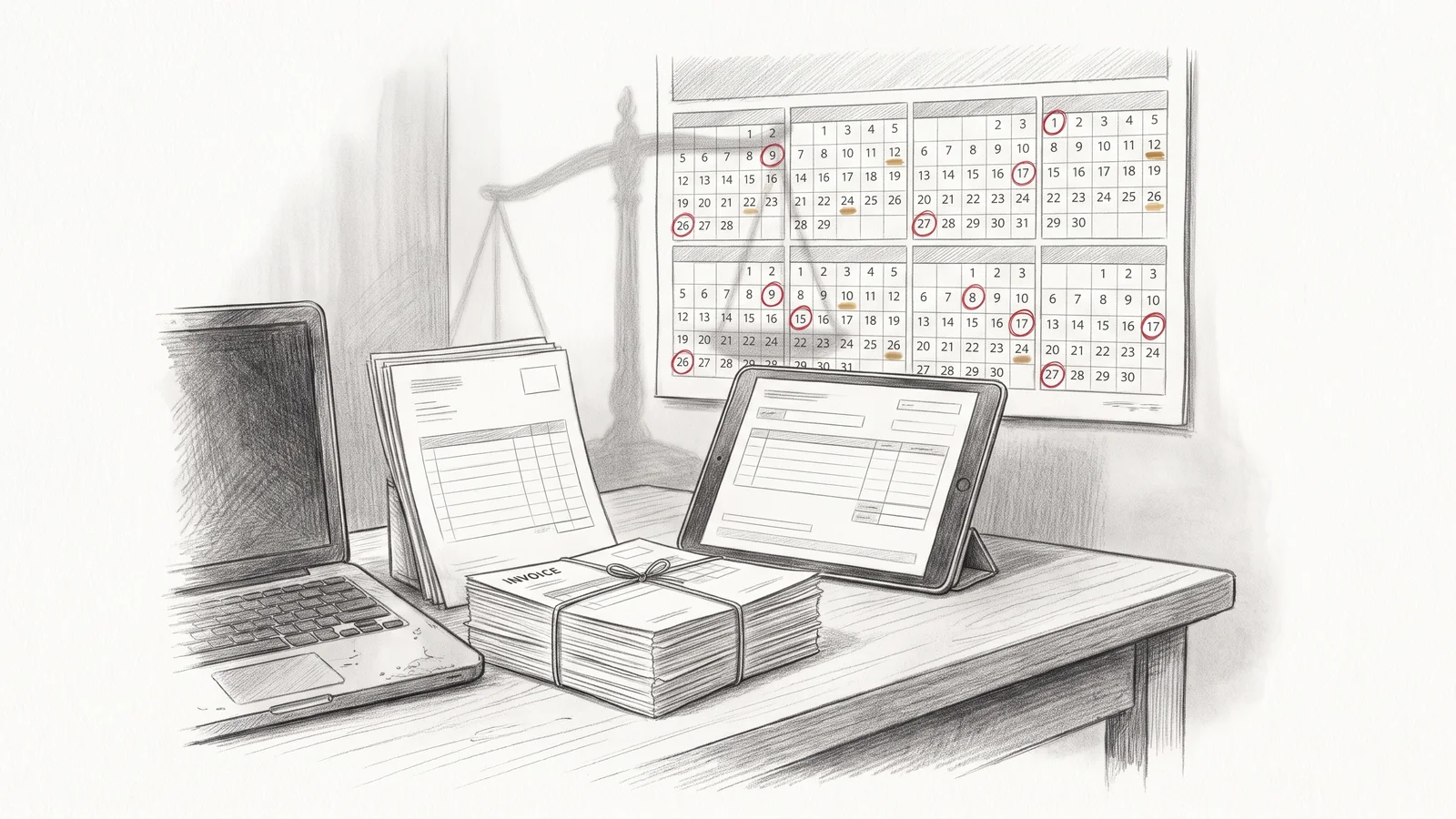
Under the regulation now in force, Spain’s rules on anti-fraud invoicing software, known as Verifactu, become mandatory for companies on 1 January 2027 and for the self-employed on 1 July 2027. Any program a business uses to issue invoices will have to create a tamper-proof record of each invoice and print a QR code on it. Companies that pay corporate tax (Impuesto sobre Sociedades) must adapt their systems before 1 January 2027. Autónomos (self-employed workers) and other businesses covered have until 1 July 2027. The Finance Ministry has said it plans a further extension, but as of November 2026 that change has not been published in the Boletín Oficial del Estado (BOE).
The short answer
- Companies (corporate tax payers): compliant software before 1 January 2027.
- Autónomos and other businesses: before 1 July 2027.
- Exempt: businesses that keep their VAT books through the SII (Suministro Inmediato de Información, the real-time VAT reporting system), and businesses that do not use invoicing software at all.
These dates come from the final provision of Real Decreto 1007/2023, as amended by Real Decreto-ley 15/2025 of 2 December. That decree-law pushed back the original 2026 dates, as the Agencia Tributaria (Spain’s tax agency) explains in its note on the extended deadlines.
Another postponement on the way?
The tax agency’s Verifactu page, updated on 3 November 2026, links to a Finance Ministry communication of 5 October 2026 on a “previsión de ampliación del plazo” (planned extension of the deadline). actualto could not open the ministry document to confirm any new dates. Until an amendment appears in the BOE, the binding deadlines are still 1 January and 1 July 2027. Those are also the dates given in the tax agency’s FAQ, updated on 21 October 2026.
Who is covered
Under article 3 of the regulation, the rules apply to corporate tax payers, self-employed income tax payers, non-residents with a permanent establishment, and partnerships that carry on an activity. They apply even if the software is used for only part of the business. According to the tax agency, they cover full and simplified invoices but not businesses based in the Basque Country or Navarre, which have their own tax systems.
Who is exempt
- SII users. Article 3.3 excludes taxpayers who keep their VAT books through the SII under article 62.6 of the VAT regulation, whether membership is compulsory or voluntary.
- Transactions that do not need an invoice, and businesses the tax agency has authorised not to issue invoices.
- Businesses without invoicing software. The obligation applies only to those who use computerised invoicing systems.
What it means in practice
Compliant software must create a billing record (registro de facturación) at the moment each invoice is issued. The record includes a digital fingerprint (hash) and a link to the previous record, so that gaps or changes can be detected, the FAQ explains. Every invoice must carry a QR code.
There are two ways to comply:
- VERI*FACTU mode: the software sends each record to the tax agency straight away. Customers can then check the invoice using the QR code.
- NON-VERI*FACTU mode: records stay with the business, but the system must sign them electronically and keep a log of system events.
For small businesses that issue few invoices, the tax agency offers a free invoicing application. It works only in VERI*FACTU mode, issues only full invoices (not simplified ones) and does not allow more than one customer per invoice.
Penalties are set out in article 201 bis of the General Tax Law. Simply having non-compliant software can lead to a fixed fine of €50,000 for each tax year. Software producers face €150,000. According to the FAQ, once the deadline applies to a business, keeping an old system that can still issue invoices can count as the offence.
Until the deadlines, the tax agency treats the period as a test phase.
This article is general information, not tax, legal or financial advice. Check your own situation with a qualified professional.